
This year I'm writing the anniversary post because Anders has decided not to participate for the time being. He says that I asked him to help me launch a blog, he did so and now he can take a step back. Which is correct, although I would have preferred him to continue. I hope he comes back, but currently I'm alone in keeping Wood from Eden alive.
I began to write a post on the nature of blogging. Then I stumbled over Erik Hoel's post on the subject, called In 2025, blogs will be the last bastion of the Good Internet. Since Erik’s description is better than my takes, I decided to argue with his position instead.
Erik writes that the Internet promotes maximalism. A good blog is like the Sistine Chapel: Extra everything. You can't see it all at once because there is so much of it. He writes:
“Personally, it’s a bit funny, because as a writer the authors I always admired were people who could do things rarely but perfectly. One perfect book. One great leap. A short story so beautifully carved it was like handling porcelain. Ideally, after writing such a thing you’d go insane or drop dead, getting your fleshy self out of the way of your creation.
Switching to blogging involved changing styles and expectations. Blogging is about quantity and maximalism. It requires not so much the analytical skills of a maximally-refined aesthetic sense, but rather a kind of robust artistic vitality. It rewards sanity and schedules and physical therapy for your tendons.
The right analogy is to works of art that embrace maximalism, or “logorrhea,” as the ancients called it. In fact, you could say that the entire internet is one massive victory for maximalism.”
In the pre-internet world, there was a general striving for excellence. Both in the sciences, the arts and philosophy. That is, a striving. When I have looked up then-hyped-and-now-forgotten books from the past I have sometimes been surprised at their bloggishness. Far from all published texts in the pre-internet era were brilliant. Not even all widely talked-about texts were.
Still, excellence was the ideal. The best scientists, philosophers, poets and novelists were supposed to publish their very best texts once in a while. In between they were supposed to work quietly.
The system was far from perfect because it depended on gatekeepers. The ideal of the best texts from the best writers could never become reality, because gatekeepers could never be perfect. The gatekeepers too often went for established thoughts and styles instead of what was new and experimentative.
Blogging is more democratic. That is why you are reading this at all - a text written by a person who always had little success with gatekeepers. Blogging promotes an unprecedented level of intellectual diversity. That is the upside.
The downside with blogging is that it also implies discarding the ideal of the best by the best. Blogging builds on confidence. People follow blogs because they trust a writer to provide them with texts that are interesting enough to read regularly. As Nate Silver puts it: It is all about forming a habit among readers. In other words, people read blog posts because they get used to reading texts by a certain writer. Not because that writer is actually very likely to have the most interesting things to tell this week.
In order to write as frequently that it forms a habit, bloggers are not only supposed to serve the best results of their thought processes. They are also supposed to share those thought processes as such, while they are happening.
“Enter my head”
is Erik's argument why people should subscribe.
I don't think that people should enter my head, because my thought processes are not pretty enough to entertain visitors from afar. A quotation on Gwern's about page explains:
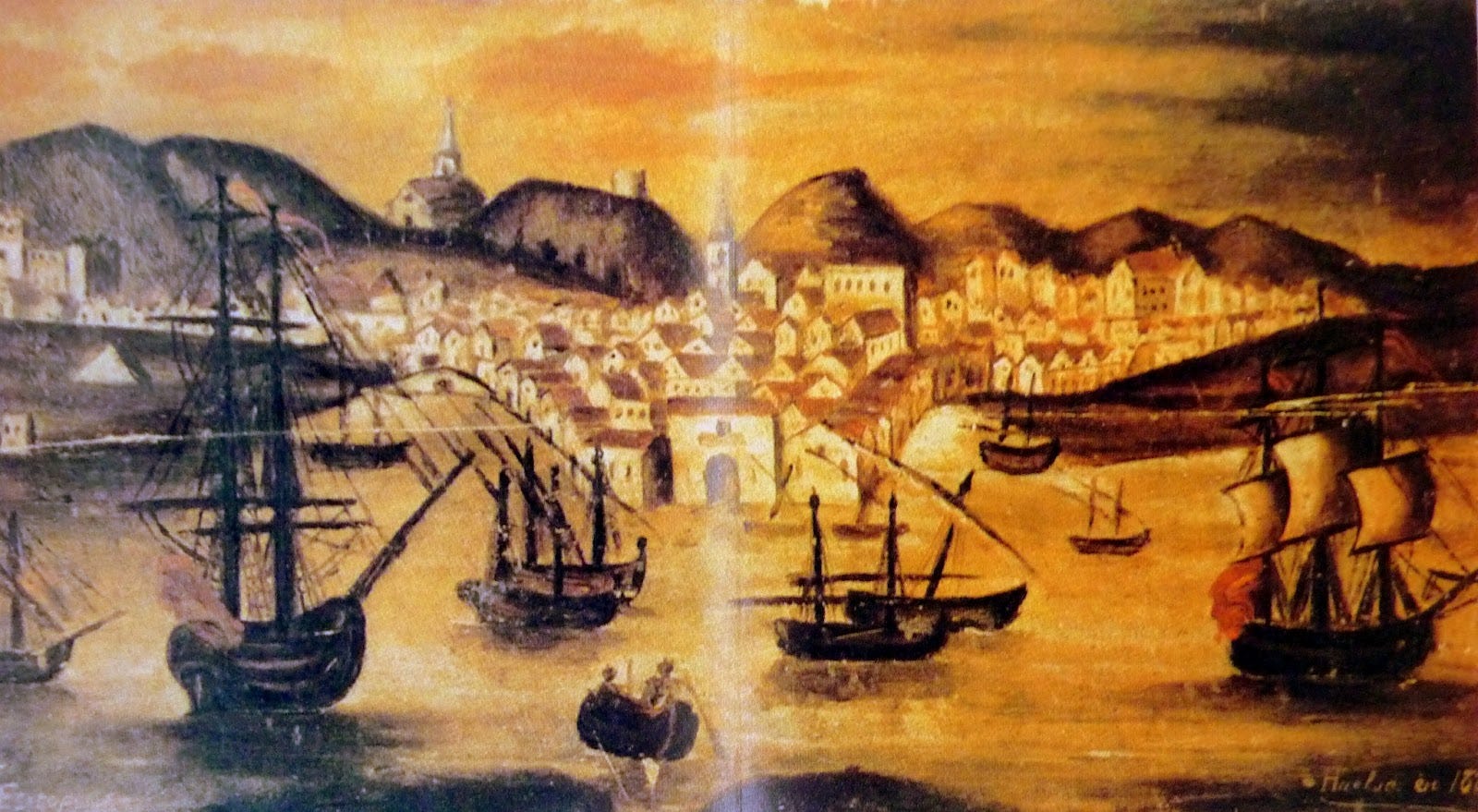
“A transition from an author’s book to his conversation, is too often like an entrance into a large city, after a distant prospect. Remotely, we see nothing but spires of temples and turrets of palaces, and imagine it the residence of splendour, grandeur and magnificence; but when we have passed the gates, we find it perplexed with narrow passages, disgraced with despicable cottages, embarrassed with obstructions, and clouded with smoke.”
Samuel Johnson; The Rambler, No. 14 (1750-05-05)1
I think that is a good description of my way of thinking: Less like the Sistine Chapel, more like an average 18th century city. When I get the idea for an essay I tend to see the contours of the final product very vaguely. Like a misty, unclear skyline of a city. In order to depict a clear-cut skyline I then need to wander around among despicable cottages, obstructions and smoke for at least a week or two before I can carve out the skyline I imagined existed.
My guess is that expert bloggers have thought processes that are more like modern cities: Well-planned, transparent and fairly logically organized. That is, thought processes that are palatable enough to invite people into. I think this is the robust artistic vitality that Erik is talking about.
In my opinion, this is the most important problem with the maximalist system of blogging: It most of all rewards beautiful thought processes. The blogosphere selects for people who can write well while they are thinking and de-selects people who write badly while they are thinking. In my world, it is only the final shape of an idea that matters for real. For that reason I avoid spending too much time reading blogs: On average they contain too many neat thought processes and too little information and ideas.
Divided
So on the one hand, I'm against blogging, because I'm against the maximalist publish-while-you-think system and its effects. On the other hand I'm for blogging because blogs provide the perspectives of a multitude of people that wouldn't otherwise be known.
My solution to this dilemma is to divide my blog in two: One where I only publish thoughts that I consider finished enough to exhibit in public. According to Samuel Johnson’s analogy, I don't release anything until the text has been lifted from the ground level of a city to the skyline. That is the free part of Wood from Eden.
By contrast, in the paid section I publish exactly once a week, whether I think I have a super great text or not or whether I think I'm in a state of good judgement or not. It is a raw outline of my family's lifestyle and, yes, of my thought processes too.
As a rule, I paywall everything which I don't want to become famous for. Paid posts don't go viral. So I paywall everything I don't want to go viral because I don't want it to go viral. It is not that I don't stand for what I write behind the paywall. But I can allow myself to be a little bit less afraid of writing something not entirely thought-through. I don't want to become known for having written something stupid without thinking enough first. I don't even want to become known for being one of those who wrote something innocent but careless and was misunderstood.
Basically, it is not financial need that makes me paywall most things I write. It is a sense of shame. Shame of revealing windling, smokey and poorly built thought processes. And shame of talking too openly about my personal whereabouts. For my peace of mind I appreciate the opportunity to publish my more personal and less thoroughly edited texts only to a smaller audience
Opening up
I'm really grateful that people are willing to pay me for writing and thereby, I hope, prove themselves to be uncritical enough to also appreciate my less well-baked thoughts. But I have no interest in running a club especially targeted at people from countries with strong currencies, high-earners and people with no dependents to care for. For that reason, the best thing would have been a pay-what-you-like function: A barrier that keeps out the idly curious people out, but that allows people who appreciate my less formal texts in.
The best solution I have come up with is to start a buy-me-a-coffee function and to urge everyone who is interested but not in the position to pay 8 dollars a month to send an email to woodfromeden [at] gmail.com with the headline “Comp request”. Write me a sentence or two about who you are, plus-minus, and I will make a comp for a year1, no questions asked. And maybe you buy me a coffee once in a while at my ko-fi account.
I see it as an experiment: Will I earn considerably less money from such a measure? My hypothesis is that I won't. I believe that people pay for blogs mainly because they consider themselves to be in the position to do so. Not mainly because bloggers cleverly lead them to. But I don't know. I will report the result of this experiment in a year.
This takes ridiculous amounts of time
One conclusion I have made by now is that blogging takes vast amounts of time. Producing a high-quality text every second week or so is actually a full-time job. It is not that way for everyone. There are many people who can produce readable text much faster than that. But they are, I believe, of the unusually sane and robust super-blogger type that Erik Hoel describes. I really need to spend 30 to 40 hours of high-quality working time (when the kids are at daycare or asleep) and another ten hours of lower-quality time to keep this project running. As soon as I can't do it as a full-time job, I realize that I can't keep it up.
Which leads to the question of asking my readers for money. I can't say that I absolutely need people to pay me for writing in order to be able to continue writing. If that was the case, I wouldn't have been able to write more or less full-time for three years earning sums not even close to a normal salary. Rather, the money you pay me supplements our modest incomes. Even more importantly, it raises my confidence and brings hope for the future.
I would like to thank all the people who are supporting us. Both those who are supporting us with money and those who are supporting us with marketing. Your help gives me the opportunity to descend into my disorderly thought processes, independent of the trends of the day. That is a great gift.

I mean, not a time limit of a year, but you will need to send me such a request once a year, because I want to restrict access to people who are interested enough to send an email once a year.
I remember reading somewhere that someone had studied artists, and generally, the ones that got into history as "great artists" had a large body of work. What they're remembered for is the best of that large body of work, though.
You mentioned rate but perfect wroting.
I often seek miniatures. A short phrase or piece of music that hits home with every word or note.